Quick CV Dropoff
Looking for your next opportunity? Upload your CV and one of our specialist consultants will review your details and get in touch if we have a suitable role that matches your skills and experience.


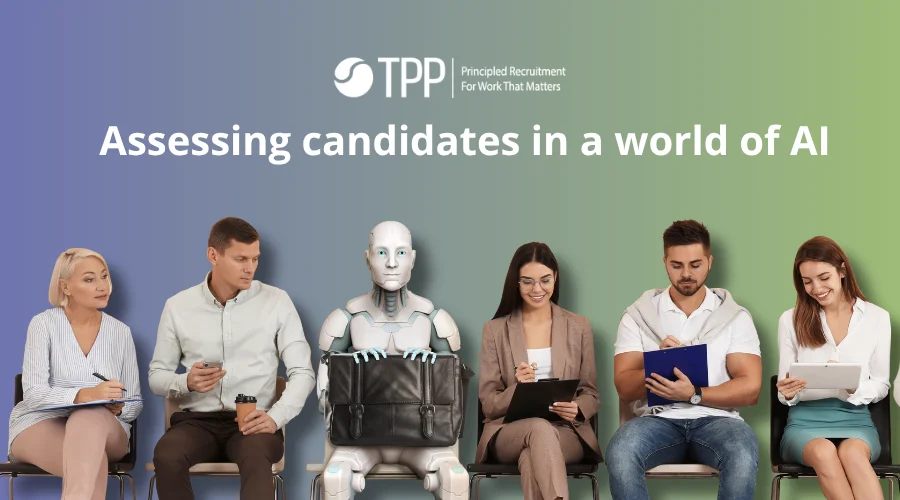
AI has changed how people look for jobs. Tools that can rewrite CVs, draft cover letters and autofill applications can feel like a shortcut and for many job seekers, they are.
At TPP Recruitment, we’re seeing a growing trend of high application volumes to roles where experience simply doesn’t align, or at least isn’t showcased on the CV. In some cases, we see identical applications from the same people across multiple vacancies, regardless of relevant experience, skills or understanding of the role.
We understand. The market has been tough for job seekers in recent months so you may think that applying for as much as possible will give you the best opportunity of securing a new role. In reality, this approach often leads to disappointment and lack of motivation as the rejections mount up.
In the non-profit sector, hiring managers are looking for relevance, evidence and motivation, not volume. Used well, AI can help you create stronger, more targeted applications, not just faster ones.
Quality over quantity
Non-profit roles are often nuanced. They value:
When applications are rushed or generic, this gets lost. Recruiters and hiring managers can usually spot an untailored application quickly, especially when key experience doesn’t match the role.
Applying for fewer, better matched roles won’t reduce your chances. In fact, it often improves them.
How to use AI effectively in your job search
AI is best used as a support tool, not an autopilot. Here are 3 smarter ways to use it:
1. Use AI to refine, not mass produce
2. Instead of submitting the same CV everywhere, use AI to:
This takes more thought, but far less time than rewriting from scratch.
3. Let AI help identify fit
Before applying, ask:
AI can help you map your experience to a job description, but it shouldn’t force a fit that isn’t there.
CV tips that make a difference
Whether AI supported or not, strong CVs tend to have this in common:
If an application doesn’t clearly show why you are suitable, it’s unlikely to progress, regardless of how quickly it was submitted.
The Bottom Line
AI isn’t the problem. How it’s used can be.
Using AI to strengthen key applications will always outperform using it to submit multiple weak ones. Slow down, be selective and apply where you genuinely fit and only use AI to help put your best application forward.
If you’re unsure whether a role is right for you, or how your experience translates, speaking to a recruiter can often save you time and frustration. You can get in touch with our Consultants at TPP by calling 020 7198 6000 or emailing info@tpp.co.uk.