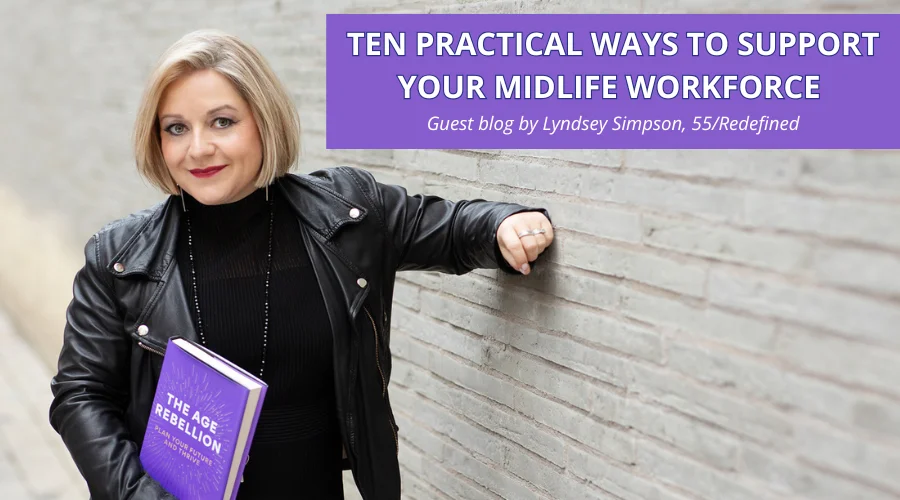
Guest blog by Lyndsey Simpson, Founder and CEO of 55/Redefined
As organisations think more carefully about how to retain experienced talent, there’s growing recognition that careers are lasting longer and don’t follow a single, linear path. At the same time, many employers are facing skills gaps while overlooking the experience already within their workforce.
Lyndsey Simpson, Founder and CEO of 55/Redefined, shares some practical ways employers can better support midlife employees and make the most of the skills, knowledge and motivation they bring.
1. Start with insight, not assumption
- Conduct a workforce audit to understand the needs, motivations and plans of midlife employees
- Open up conversations about later careers without stigma or fear
- Avoid assuming people want to retire. Many don’t
2. Redesign career paths for the 100-year life
- Move away from linear “cliff-edge” careers and retirement assumptions
- Create glide paths: reduced hours, phased retirement, portfolio careers
- Recognise that careers now span 50+ years, not 30
3. Put flexibility at the centre
- Offer part-time, flexible and hybrid working options
- Support caring responsibilities without penalising progression
- Introduce sabbaticals or structured breaks to retain talent long term
4. Invest in reskilling and reinvention
- Provide access to reskilling, upskilling and cross-functional moves
- Encourage experimentation, not perfection
- Treat career change as evolution, not decline
5. Focus on purpose, not just pay
- Help employees reconnect with what gives them meaning
- Offer roles that align with purpose, mentoring, or impact-led work
- Recognise that motivations can shift in midlife
6. Build intergenerational teams deliberately
- Create opportunities for knowledge transfer both ways
- Introduce reciprocal mentoring across age groups
- Value experience as a strategic asset, not a cost
7. Remove bias from hiring and progression
- Audit recruitment language, imagery and criteria
- Ensure opportunities are open at every age and stage
- Challenge outdated assumptions about “career stage”
8. Measure what matters
- Track retention, engagement and progression by age group
- Identify risk points like early exits or forced retirement
- Treat age strategy as a growth strategy, not a HR initiative
9. Create a culture where people feel safe to stay
- Normalise conversations about longevity and changing ambitions
- Remove the fear of being “managed out” after 50
- Celebrate long tenure as a strength, not a signal to exit
10. Recognise the business case
- Experienced workers are more likely to stay and less likely to leave early
- They contribute to productivity, customer insight and stability
- Retaining them is often more cost-effective than replacing them
Discover more inspiration and advice on midlife careers in Lyndsey's Sunday Times Bestseller - The Age Rebellion: Supercharge the second half of your life
To talk about your workplace needs visit 55/Redefined